
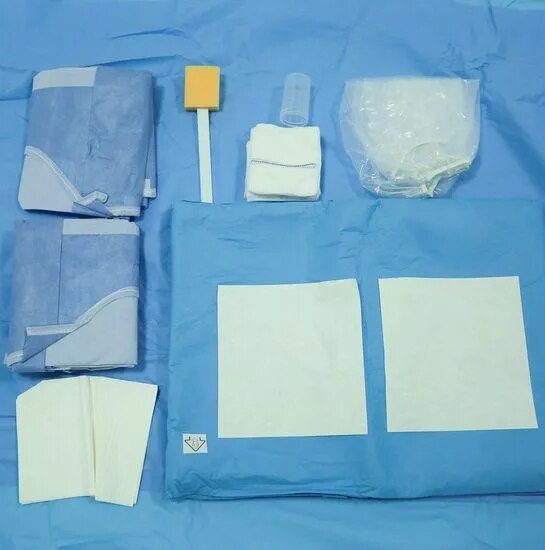
SURGICAL DRAPES
Description
Surgical Drapes are sterile or non-sterile protective coverings used during surgical and medical procedures to create a controlled working area around the patient. They cover the patient and surrounding surfaces while leaving only the required surgical site exposed.
Main Purpose
Surgical drapes help:
Maintain a clean and controlled surgical field
Cover areas that do not need to be exposed
Help reduce contamination from surrounding surfaces
Absorb or control blood and other fluids, depending on the drape design
Provide convenient access to the surgical site
Common Types of Surgical Drapes
General Surgical Drapes
Ophthalmic / Eye Drapes
Fenestrated Drapes
Laparotomy Drapes
Orthopedic Drapes
C-Section Drapes
Lithotomy Drapes
Mayo Stand Covers
Back Table Covers
Instrument Table Covers
Materials
Disposable surgical drapes may be manufactured from materials such as:
Non-woven polypropylene (PP)
SMS / SMMS fabric
Spunlace
PE-coated or laminated materials
Absorbent and fluid-resistant composite materials
The material and construction depend on the procedure and required barrier/absorbency performance.
Where are Surgical Drapes Used?
Surgical drapes are commonly used in:
🏥 Hospitals
🩺 Operation Theatres
👁️ Ophthalmic Surgery
🦴 Orthopedic Surgery
🤰 Obstetric & C-Section Procedures
🦷 Dental & Maxillofacial Procedures
🏥 Clinics & Surgical Centres
Simple Definition
Surgical Drapes are protective medical coverings used during surgery to isolate the operating area, protect the patient and surrounding surfaces, and help maintain an appropriate surgical environment.